
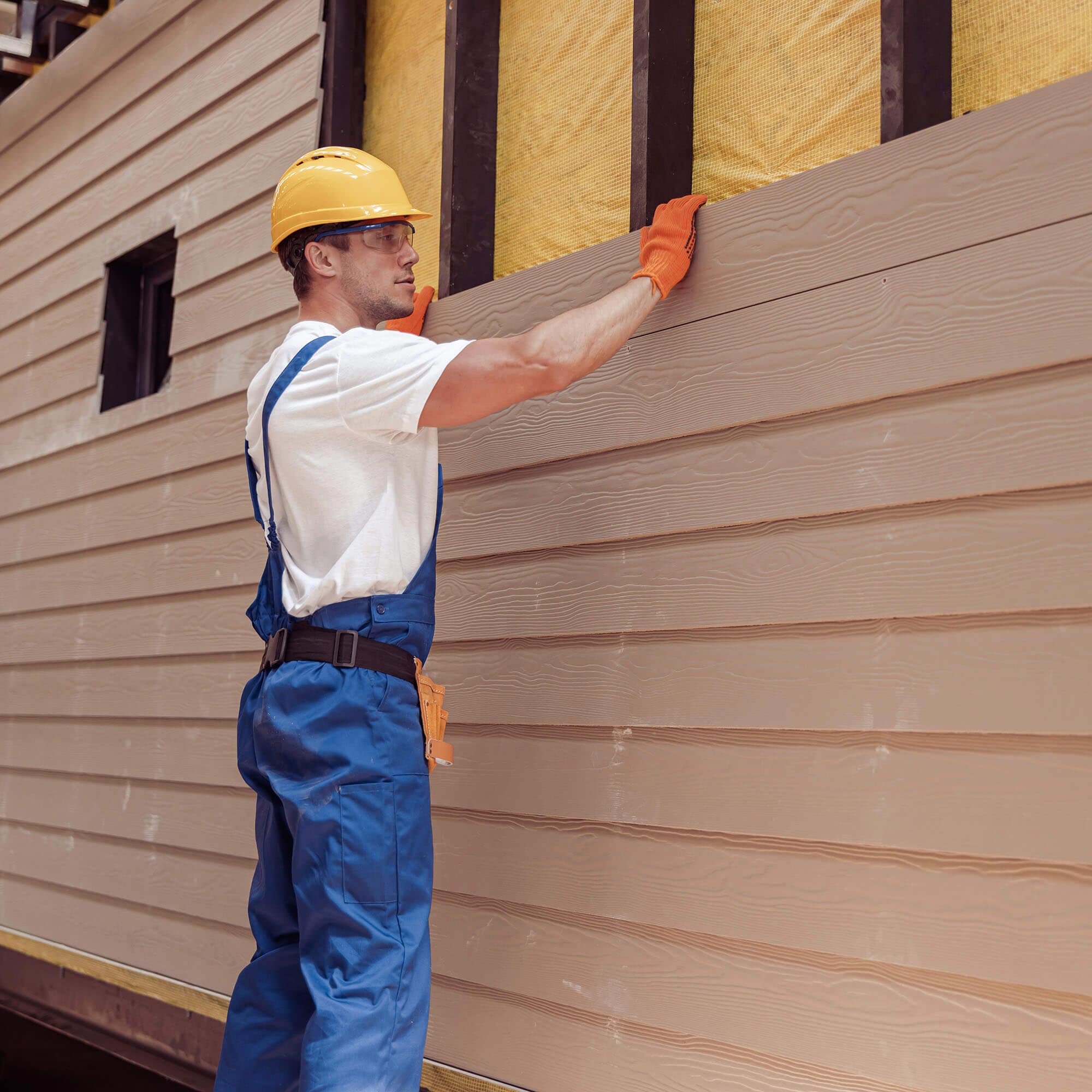
Siding Options For Every Home
How It Works
Tell Us About Your Project
A few quick questions about your project, your home, and your budget. Takes under two minutes.
Get Matched With Local Pros
We connect you with top-rated contractors in your area who compete for your business.
Compare & Choose
Review quotes side-by-side. Pick the contractor whose price, approach, and timeline feel right. No obligation.
Why Homeowners Use HomesAce For Siding
New siding may offer strong resale value compared with other exterior upgrades. The right contractor matters as much as the brand. HomesAce helps you compare quotes from top-rated local pros with zero obligation.
Up To 4 Quotes
Connect with up to 4 top-rated local siding pros and start your quote in under two minutes so you can compare materials, brands, and labor side by side.
Brand Comparison
Quotes may cover popular siding brands so you can compare price, product, and available warranty options.
Compare Local Pros
Compare top-rated local siding contractors and review their pricing, project approach, and available warranty options before choosing who to hire.
No Pushy Sales
You set the pace. Quotes are non-binding and you owe nothing if you decide to wait, repair, or replace later.
Local Pros Only
We match you with local installers who serve your area and understand common siding needs in your region.
100% Free Service
HomesAce is paid by the contractors, not you. Quotes, comparisons, and the matching process cost you nothing.
New Siding Pays You Back
Top-Tier Resale Return
Fiber cement siding returns about 88% of its cost at resale and vinyl siding returns about 80%, per the 2024 Cost vs Value report. Both rank in the top 5 home upgrades nationwide.
Lower Energy Bills
Adding insulated siding with an R-value of 3 to 4 may help reduce heating and cooling costs by around 5% to 15% per year, depending on the home, climate, and installation details.
30 To 50 Year Lifespan
Vinyl siding may last 30 to 40 years, and fiber cement may last 50 plus years, depending on product, installation, and maintenance. Warranty options vary by manufacturer and contractor.
Insurance And Storm Resistance
Impact-rated fiber cement and steel siding may help lower homeowners insurance premiums by around 5% to 20% in some hail and hurricane-prone areas, depending on carrier, location, and policy details.
Want deeper siding pricing?
Our full siding cost guide breaks down pricing by material, brand, square footage, trim, and tear-off, with pricing examples to help you compare options.
Typical Range
$8,000 – $40,000
National Avg.
$15,500
Siding Cost By Material
Prices below cover a typical 2,000 sq ft single-family home including tear-off and disposal. See the full cost guide for trim, soffit, and insulation pricing.
Costs depend on size, materials, local labor rates, and complexity. Get free quotes for accurate pricing in your area.
Get Free QuotesCommon Questions
Frequently Asked Questions
A standard 2,000 sq ft home takes 5 to 10 working days for vinyl and 7 to 14 days for fiber cement or engineered wood. Tear-off, sheathing repairs, and house wrap add 1 to 2 days. Weather, two-story homes, and detailed trim work all extend the timeline. Most reputable contractors will give you a written start and finish date plus a rain delay clause.
Vinyl is the cheapest at $8,000 to $16,000 installed and needs almost no maintenance for 30 plus years. Fiber cement costs 60% to 90% more but handles fire, hail, and termites better and looks closer to real wood. Engineered wood (LP SmartSide) sits in the middle on price and is lighter and easier to install than fiber cement. Most US homeowners pick vinyl for budget or fiber cement for resale.
Tear-off is the better long-term call and adds about $1,000 to $3,000 to the project. It lets the installer inspect the sheathing for rot, add house wrap or rigid foam, and flash the windows properly. Going over old siding saves money up front but traps moisture, voids most manufacturer warranties, and makes future repairs harder. Building codes in most states only allow one layer of siding anyway.
Standard vinyl or fiber cement on its own does not insulate much. The savings come from adding rigid foam underneath or choosing insulated vinyl with a built-in foam backer rated R-3 to R-4. Combined with a fresh layer of house wrap, that upgrade typically cuts heating and cooling costs 5% to 15% per year. Add about $1.50 to $3.00 per sq ft for insulated vinyl over standard.
Repair makes sense if damage is limited to one wall or under 20% of the surface, costing $400 to $2,500. Full replacement is the right call when you see widespread cracking, warped panels, soft spots in the sheathing, or peeling paint that returns within a year. If your siding is over 25 years old and you see issues on multiple sides of the house, replacement is almost always more cost-effective than repeat repairs.
Late fall through early winter, roughly October through February, is the slowest season for most siding crews and prices run 5% to 15% below peak. Spring and early summer are peak demand because of curb appeal projects before resale season. Most siding installs fine in temperatures above 40F. Vinyl gets brittle below 32F so installers will reschedule on bitter cold days, but otherwise winter is a smart booking window.
Ask for their state license number, proof of $1 million liability insurance, and proof of workers comp. Confirm the exact brand, product line, and color in writing, since fiber cement warranties are voided by uncertified installers. Get the workmanship warranty in years separate from the manufacturer warranty. Ask whether they pull the permit, whether tear-off is included, and what happens if rotted sheathing is found during install.
Join thousands of homeowners who saved on New Siding!
Ready to Compare Siding Costs?
Tell us about your home and we will match you with up to 4 local pros today.
Free quotes • Zero obligation • Trusted local pros • Start today
Get Free Quotes

