
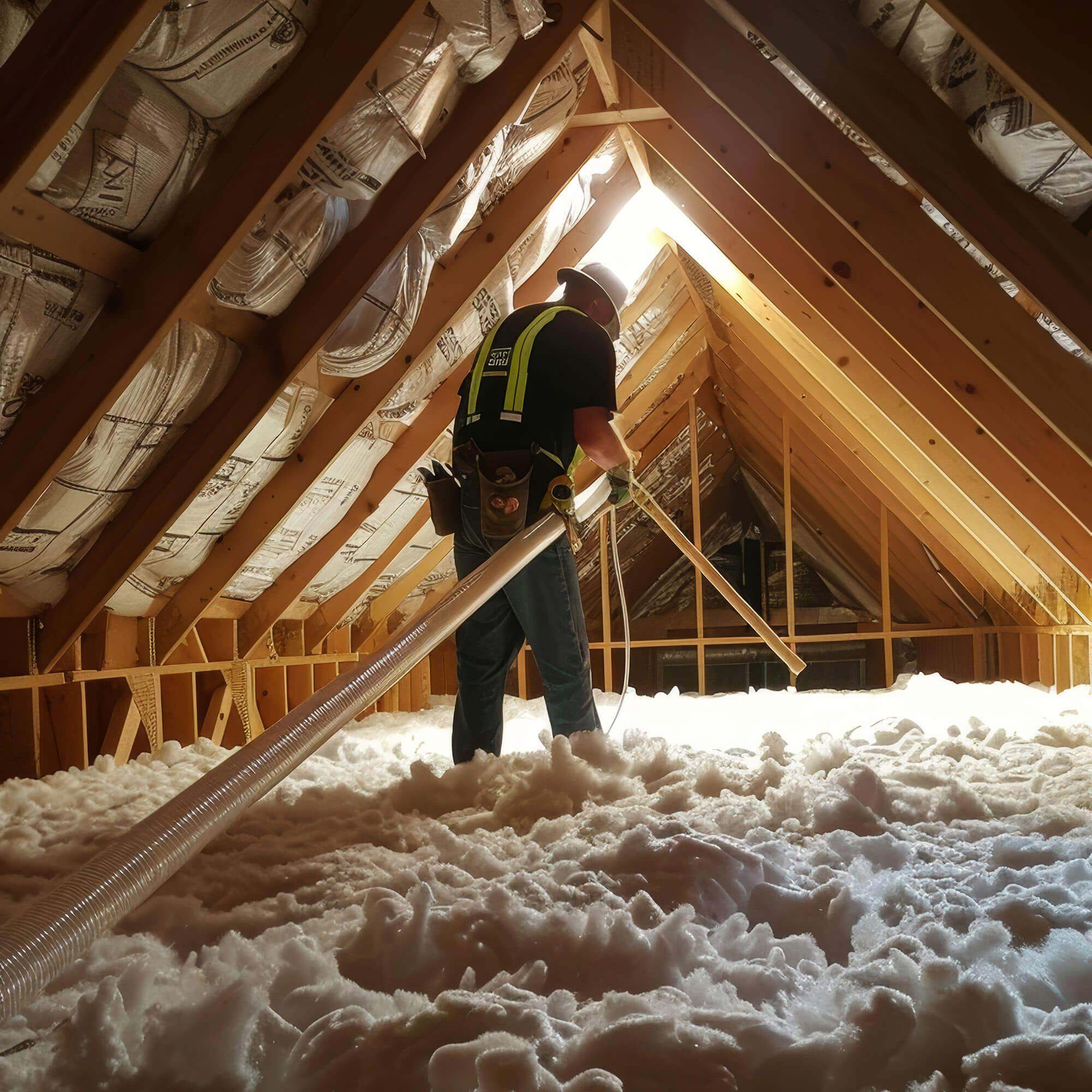
Insulation Options For Every Home
How It Works
Tell Us About Your Project
A few quick questions about your project, your home, and your budget. Takes under two minutes.
Get Matched With Local Pros
We connect you with top-rated contractors in your area who compete for your business.
Compare & Choose
Review quotes side-by-side. Pick the contractor whose price, approach, and timeline feel right. No obligation.
Why Homeowners Use HomesAce For Insulation
Insulation can be a strong energy-saving upgrade when installed correctly. The right contractor matters more than the material brand. HomesAce helps you compare quotes from top-rated local insulation pros with zero obligation.
Up To 4 Quotes
Connect with up to 4 top-rated insulation pros and start your quote in under two minutes so you can compare R-values, materials, and labor side by side.
Energy Audit Pros
Some insulation contractors may offer home energy audits to help identify air leaks and weak insulation before quoting the right scope.
Top-Rated Local Pros
Compare top-rated local insulation contractors and review their pricing, project scope, materials, and available service guarantees before choosing who to hire.
Energy-Efficient Upgrade Options
Some insulation projects may qualify for available energy-efficiency incentives, depending on product type, location, eligibility, and current program rules.
No Pushy Sales
You set the pace. Quotes are non-binding and you owe nothing if you decide to wait or do the work in phases.
100% Free Service
HomesAce is paid by the contractors, not you. Quotes, comparisons, and the matching process cost you nothing.
Insulation Pays You Back Fast
Big Energy Savings
Properly insulating your attic to R-49 or R-60 may help reduce heating and cooling costs by around 10% to 20% per year, with possible savings of $200 to $600 in the average US home according to ENERGY STAR.
Fast Payback Period
Some attic insulation upgrades may pay back in around 3 to 7 years through energy savings, depending on the home, climate, insulation levels, and energy costs.
Eco-Friendly Efficiency
Energy-efficient insulation upgrades help optimize household energy retention and can minimize the workload on heating and cooling systems.
Year-Round Comfort
Proper insulation may help reduce temperature swings between rooms and improve year-round comfort, depending on the home, climate, and existing insulation.
Want deeper insulation pricing?
Our full insulation cost guide breaks down costs by material, R-value, area type, and region — with real numbers from installations completed this year.
Typical Range
$0.50 – $4 per sq ft
National Avg.
$1.75 / sq ft
Insulation Cost By Type
Prices below cover material plus installation per square foot. See the full cost guide for whole-home and air sealing pricing.
Costs depend on size, materials, local labor rates, and complexity. Get free quotes for accurate pricing in your area.
Get Free QuotesCommon Questions
Frequently Asked Questions
A typical 1,500 sq ft attic costs $1,500 to $3,500 for blown-in cellulose or fiberglass to R-49 or R-60. Spray foam runs $3,000 to $6,000 for the same attic. Add $300 to $800 for air sealing the gaps around recessed lights, ducts, and the attic hatch. Most attics in homes built before 2000 are under-insulated and the upgrade pays for itself in 3 to 7 years.
Fiberglass batts at $0.50 to $1.50 per sq ft are cheapest and easiest for open attic spaces. Blown-in cellulose at $1 to $2 per sq ft fills gaps better and uses recycled paper. Spray foam at $1.50 to $4 per sq ft seals air leaks while insulating but costs the most. Most US attics get blown-in cellulose for the price-to-performance ratio. Spray foam is the right choice for crawl spaces, rim joists, and basement walls.
Department of Energy guidelines call for R-49 to R-60 for attics in cold climates like the Northeast and Midwest, R-38 to R-49 for mixed climates, and R-30 to R-38 for warm climates like the Gulf states. R-49 of cellulose is about 14 inches deep. R-60 is about 17 inches. Most homes built before 2000 have R-19 to R-30, so adding 8 to 12 inches gets you to current code.
Yes, in most cases. Topping up existing fiberglass or cellulose with more of the same material is the standard approach and avoids the cost of removing the old insulation. The exception is when the existing insulation is wet, moldy, or rodent-damaged, which adds $1,000 to $3,000 for removal first. A good contractor inspects with a flashlight before quoting and will flag removal needs in writing.
Blown-in attic insulation for a typical home wraps up in 3 to 6 hours. Wall insulation by drill-and-fill blown-in takes 1 to 2 days. Spray foam in an attic or crawl space takes 1 to 2 days plus 24 hours of cure time before you can re-enter the space. Whole-home insulation upgrades for new construction or major renovations take 3 to 5 days. Most installs let you stay home during the work.
Closed-cell spray foam at $2 to $4 per sq ft costs 2 to 4 times more than blown-in but seals air leaks while insulating, with R-values of 6 to 7 per inch versus 3.5 for cellulose. It is worth the upgrade for crawl spaces, basement rim joists, and homes with chronic drafts. For a typical open attic floor, blown-in cellulose with separate air sealing usually beats spray foam on cost-effectiveness.
Insulation creates a thermal barrier that resists heat transfer between the inside of your home and the outdoors. By keeping conditioned air inside and preventing outdoor temperatures from seeping in, your heating and cooling systems don't have to work as hard to maintain a comfortable environment, which directly reduces ongoing utility consumption.
Join thousands of homeowners who saved on Insulation!
Ready to Compare Insulation Costs?
Tell us about your home and we will match you with up to 4 local pros today.
Free quotes • Zero obligation • Trusted local pros • Start today
Get Free Quotes

