
Walk-In Tub And Shower Options
How It Works
Tell Us About Your Project
A few quick questions about your project, your home, and your budget. Takes under two minutes.
Get Matched With Local Pros
We connect you with top-rated contractors in your area who compete for your business.
Compare & Choose
Review quotes side-by-side. Pick the contractor whose price, approach, and timeline feel right. No obligation.
Why Homeowners Use HomesAce For Walk-In Tubs
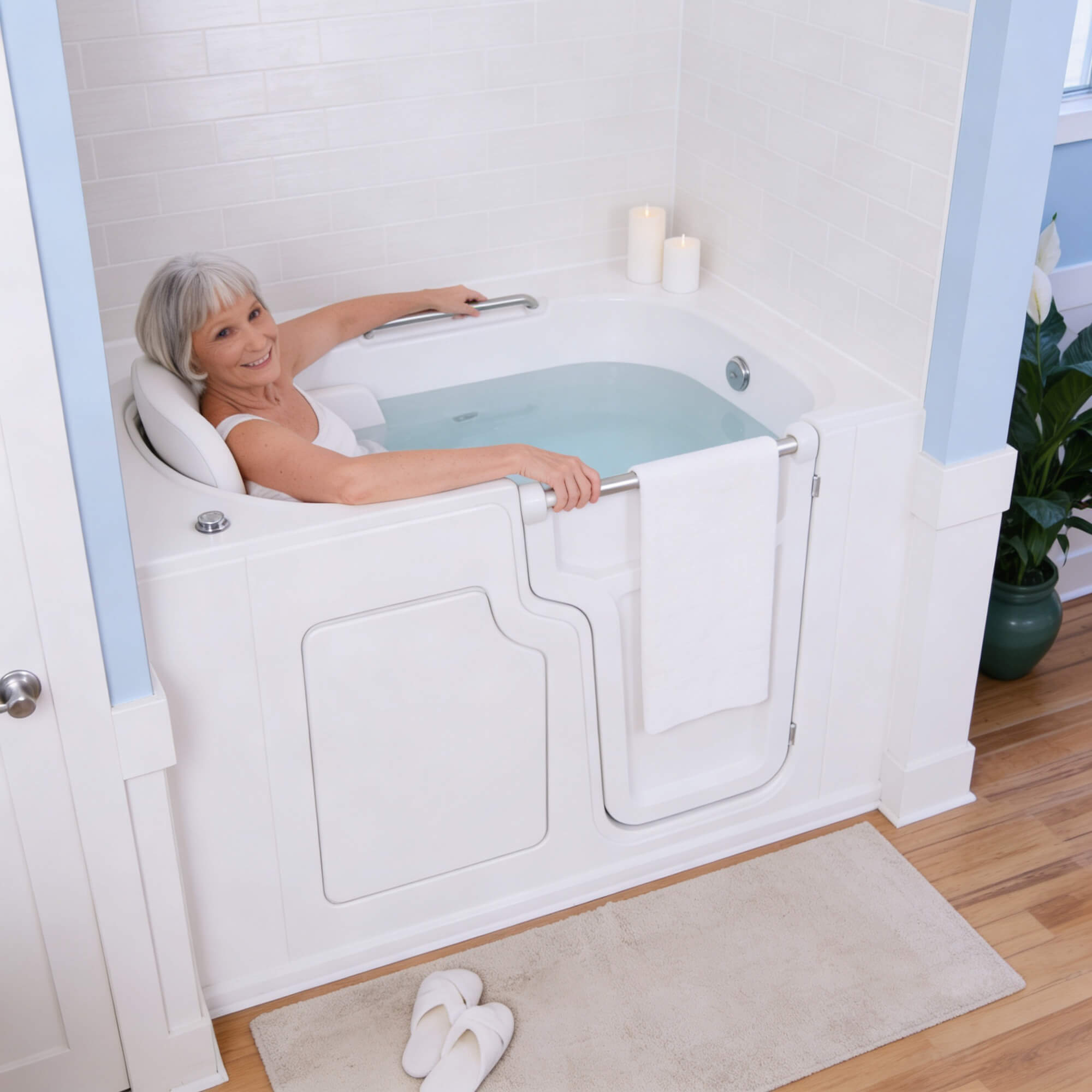
A walk-in tub can be an important bath upgrade for homeowners who want safer, easier access. The right installer matters as much as the product features. HomesAce helps you compare quotes from top-rated local walk-in tub installers with zero obligation.
Up To 4 Quotes
Connect with up to 4 top-rated walk-in tub installers and start your quote in under two minutes so you can compare features, options, and labor side by side.
Brand Comparison
Quotes may cover popular walk-in tub options so you can compare price, features, and available warranty coverage.
Top-Rated Local Pros
Compare top-rated local walk-in tub installers and review their pricing, product options, installation approach, and available service guarantees before choosing who to hire.
Senior-Focused Pros
Some installers may offer aging-in-place bathroom upgrades and help compare options like grab bars, low-entry tubs, and accessibility-focused layouts.
No Pushy Sales
You set the pace. Quotes are non-binding and you owe nothing if you decide to wait or pick a different bathing solution.
100% Free Service
HomesAce is paid by the contractors, not you. Quotes, comparisons, and the matching process cost you nothing.
Walk-In Tubs Keep You Independent
Lower Fall Risk
Falls in the bathroom send 235,000 Americans to the ER every year per CDC data. Walk-in tubs with low 3 to 7 inch thresholds and grab bars cut bathroom fall risk dramatically.
Stay In Your Home Longer
The average assisted living facility costs $5,350 per month or $64,200 per year. A walk-in tub investment of $5,000 to $15,000 may help some homeowners make their bathroom more accessible and remain at home longer.
Hydrotherapy Health Benefits
Warm-water hydrotherapy can reduce arthritis pain, improve circulation, and ease joint stiffness, with consistent benefits documented in multiple peer-reviewed studies.
Enhanced Safety Layouts
Walk-in tubs may help support safer, more accessible bathing for homeowners with mobility needs.
Want deeper walk-in tub pricing?
Our full walk-in tub cost guide breaks down costs by feature, plumbing scope, product type, and region, with pricing examples to help you compare options.
Typical Range
$3,000 – $20,000
National Avg.
$8,500
Walk-In Tub Cost By Type
Prices below cover the tub plus standard installation. See the full cost guide for plumbing changes, tile work, and tub-to-shower conversions.
Costs depend on size, materials, local labor rates, and complexity. Get free quotes for accurate pricing in your area.
Get Free QuotesCommon Questions
Frequently Asked Questions
Most standard walk-in tub installs take 1 to 3 days from removal of the old tub to first use. Same-day install programs from major brands wrap up in 8 to 10 hours if no plumbing reroute is needed. Add 1 to 2 days for tile work, drywall repair, or a new water heater. The tub itself ships in 2 to 4 weeks after order. Most installers schedule the demo and install for the same week.
Original Medicare typically does not cover walk-in tubs because they are classified as home modifications, not durable medical equipment. Some Medicare Advantage plans offer partial reimbursement of $500 to $2,000 if a doctor prescribes it for a medical condition. Veterans may qualify for VA HISA grants up to $6,800. Check with your plan and ask the installer for an itemized invoice that separates medical from cosmetic costs.
Soaker walk-in tubs at $3,000 to $7,000 work well for safety and easy access without ongoing maintenance. Hydrotherapy adds $2,000 to $6,000 for water jets, air jets, or both. Water jets feel more intense and help with deep muscle pain, while air jets feel softer and help circulation. For arthritis or chronic joint pain, the upgrade is usually worth it. For mobility-only concerns, a soaker is plenty.
Standard walk-in tubs take 6 to 10 minutes to fill and 8 to 15 minutes to drain. Fast-fill and fast-drain models cut both numbers roughly in half and add $500 to $1,500 to the price. Since you sit inside while the tub fills and drains, fast-drain is the more important upgrade. Most homeowners also upgrade to a 75 to 80 gallon water heater to fill the tub fully without running cold.
Most standard walk-in tubs fit in the same 60 by 30 inch footprint as a regular bathtub. Heated and bariatric models can run 60 by 36 inches and may need wall framing changes. Wheelchair-accessible tubs require 60 by 32 inch openings and clear floor space outside for transfer. A free in-home measurement from any reputable installer will confirm fit and flag any plumbing or framing issues before you commit.
It depends on the buyer. Walk-in tubs add value if your home will appeal to buyers 55 plus, especially in retirement communities and warmer states. They can subtract value if your home is marketed to young families who want a regular soaking tub or shower. Many sellers in mixed markets opt for a tub-to-shower conversion instead, which appeals to all age groups and costs $4,000 to $12,000.
Confirm the brand, model, jet count, and door type in writing. Ask about the door warranty since the seal is the part most likely to fail, with quality models offering lifetime door warranties. Confirm whether the price includes the larger water heater that walk-in tubs often need. Ask if the installer is factory-certified for the brand and check 3 references from local jobs completed in the last 12 months.
Join thousands of homeowners who saved on Walk-In Tubs!
Ready to Compare Walk-In Tub Costs?
Tell us about your project and we will match you with up to 4 local pros today.
Free quotes • Zero obligation • Trusted local pros • Start today
Get Free Quotes